Slovenščina | English
St. Pancras, who reigns supreme
Remains from late antiquity and the Early Middle Ages have been discovered in the Mislinja Valley in Carinthia. On the ridge of Puščava above Stari trg near Slovenj Gradec, a cemetery from the 8th and 9th centuries served as the burial ground for the inhabitants of the settlement on the Castle Hill. Evidence of ritual sites has been found within the cemetery.
Slightly later Slavic finds come from the subsidiary church of St. George at Legen, where earlier construction phases and the foundations of the earliest church, dating to the late 9th and 10th centuries, were uncovered in the floor layers. 26 Slavic skeletal graves were discovered.
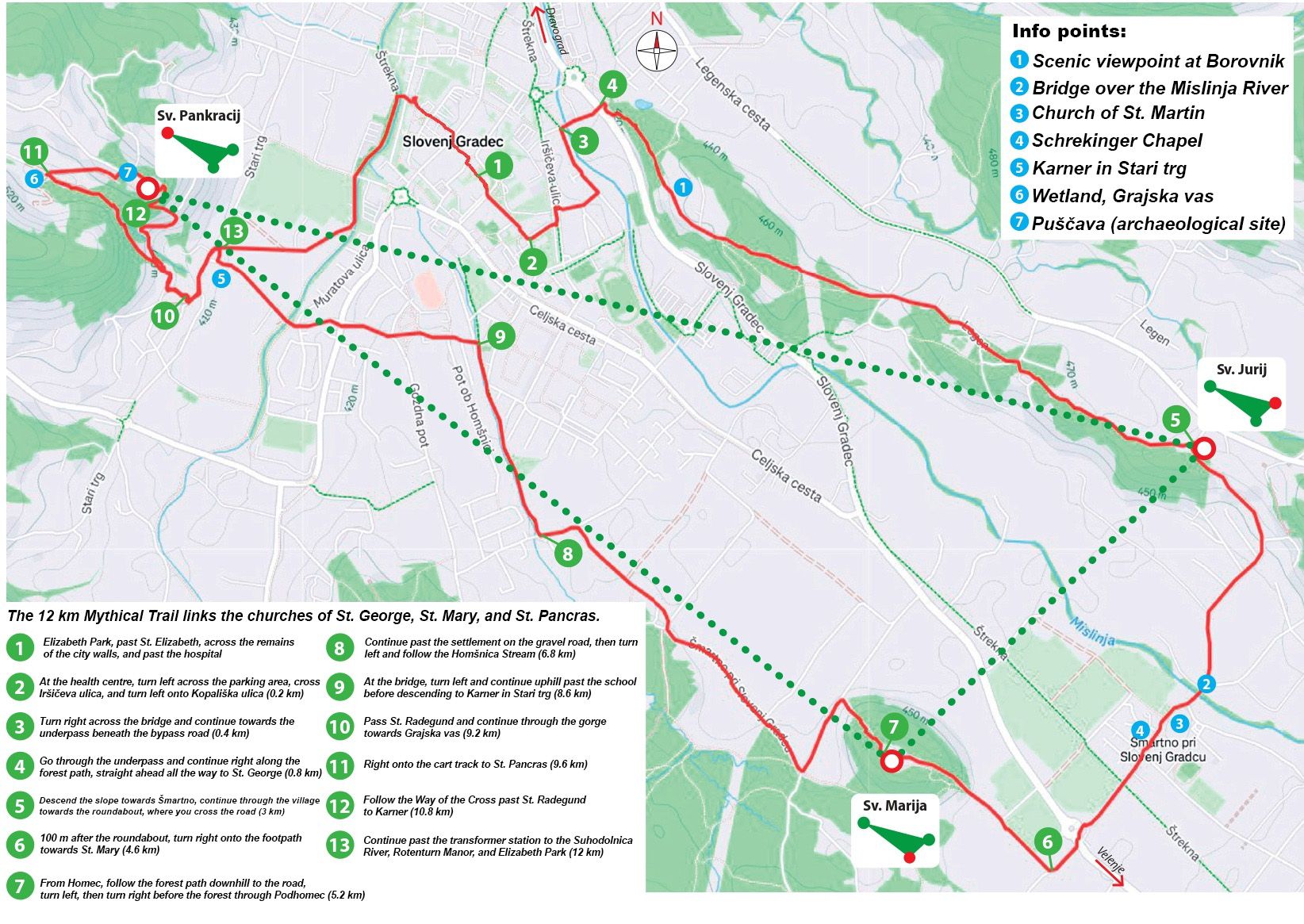
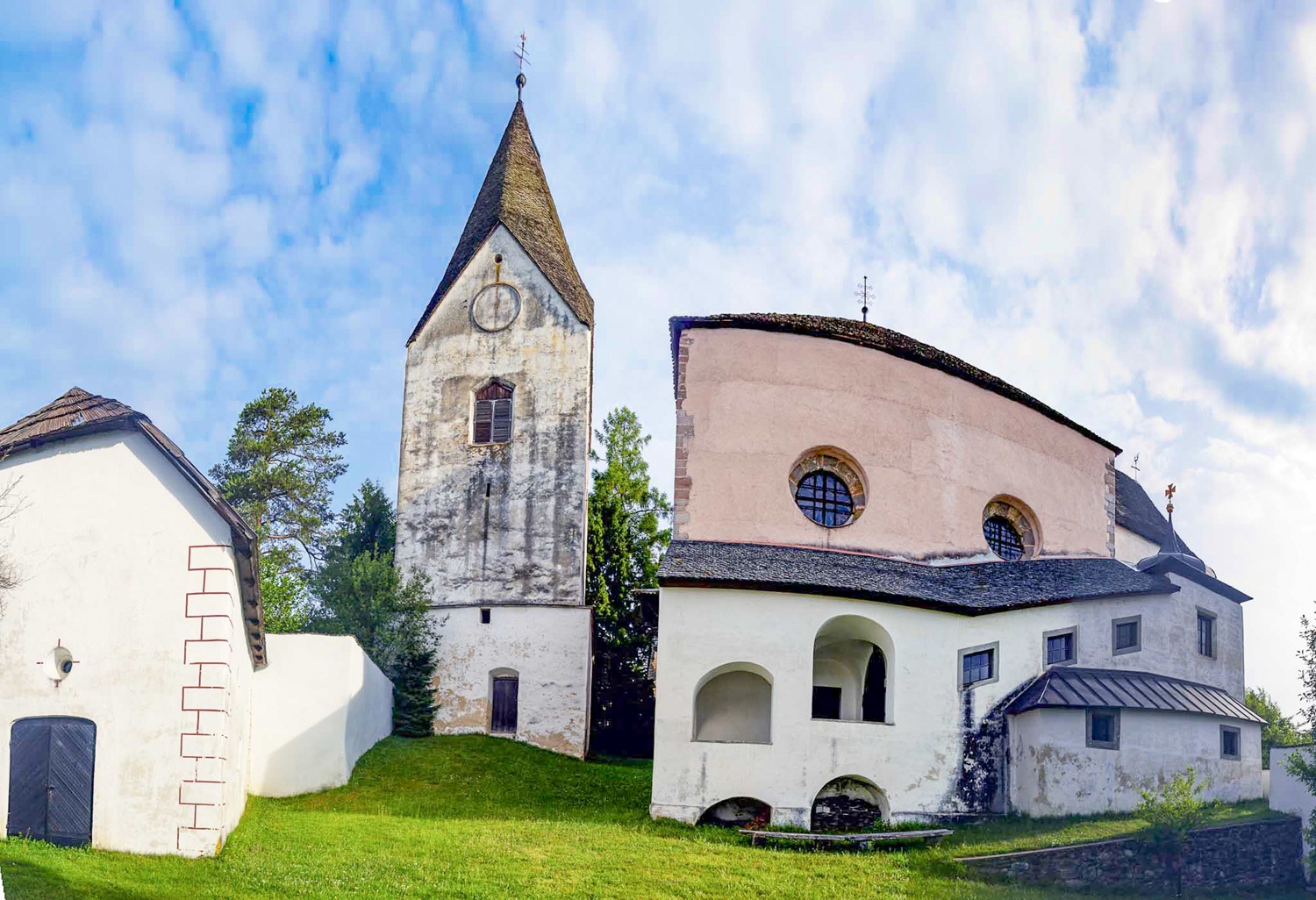
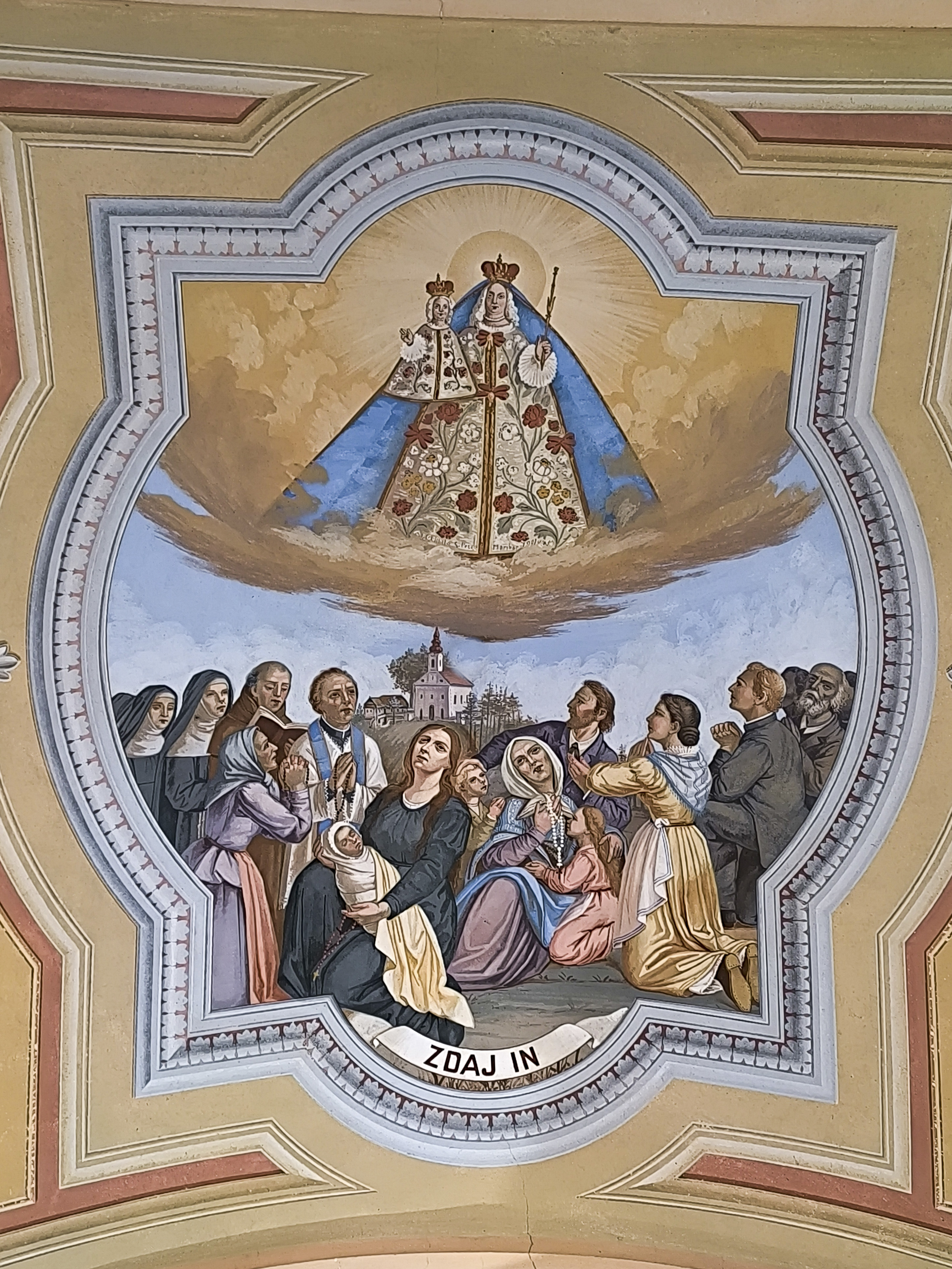
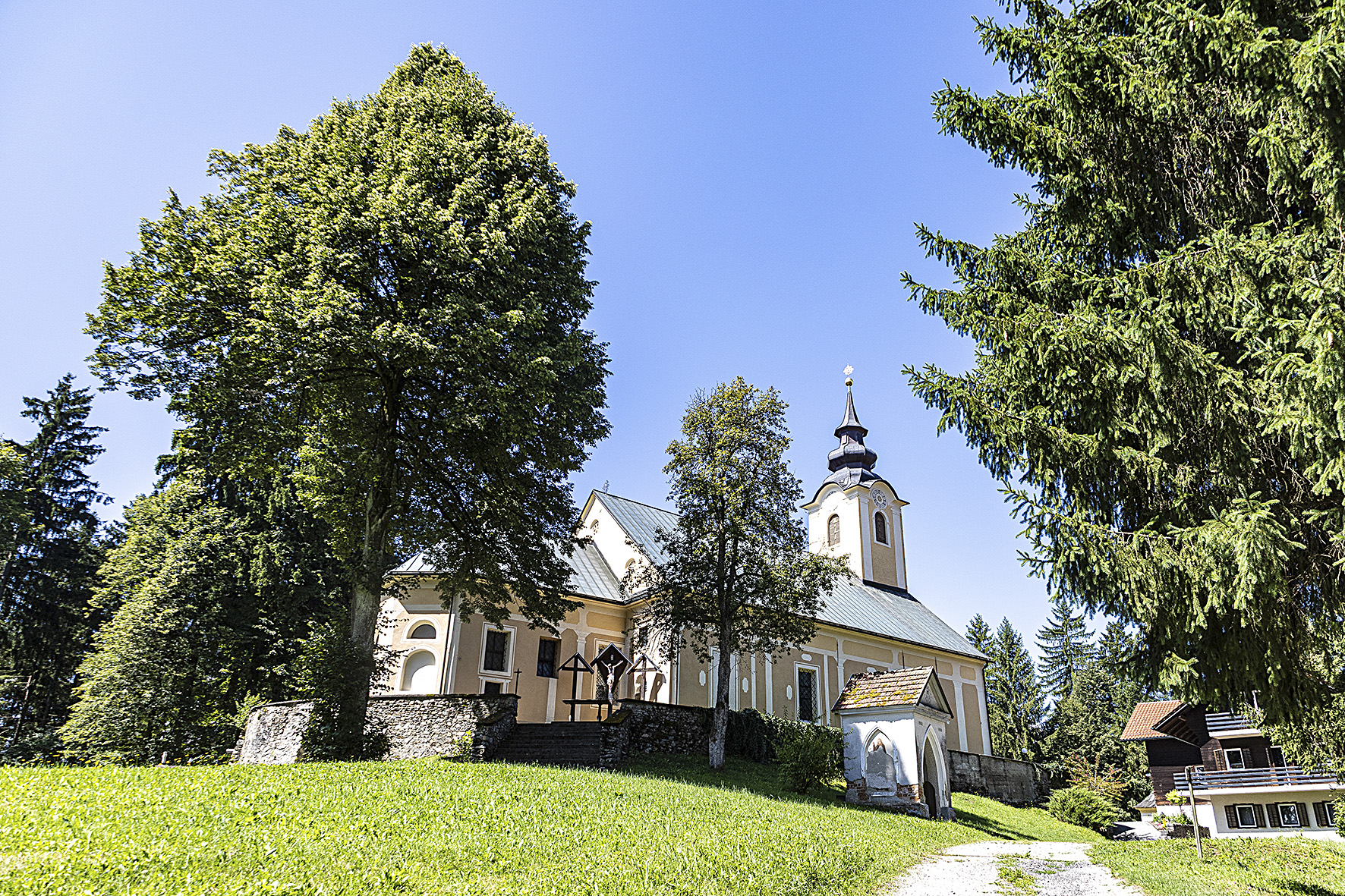
Homec, with the Church of St. Mary Ascended, forms the symbolic centre of the mythical landscape of the Mislinja Valley. Since 2009, the church has been part of the Association of Marian shrines in the universal Church, with the right to full indulgence.
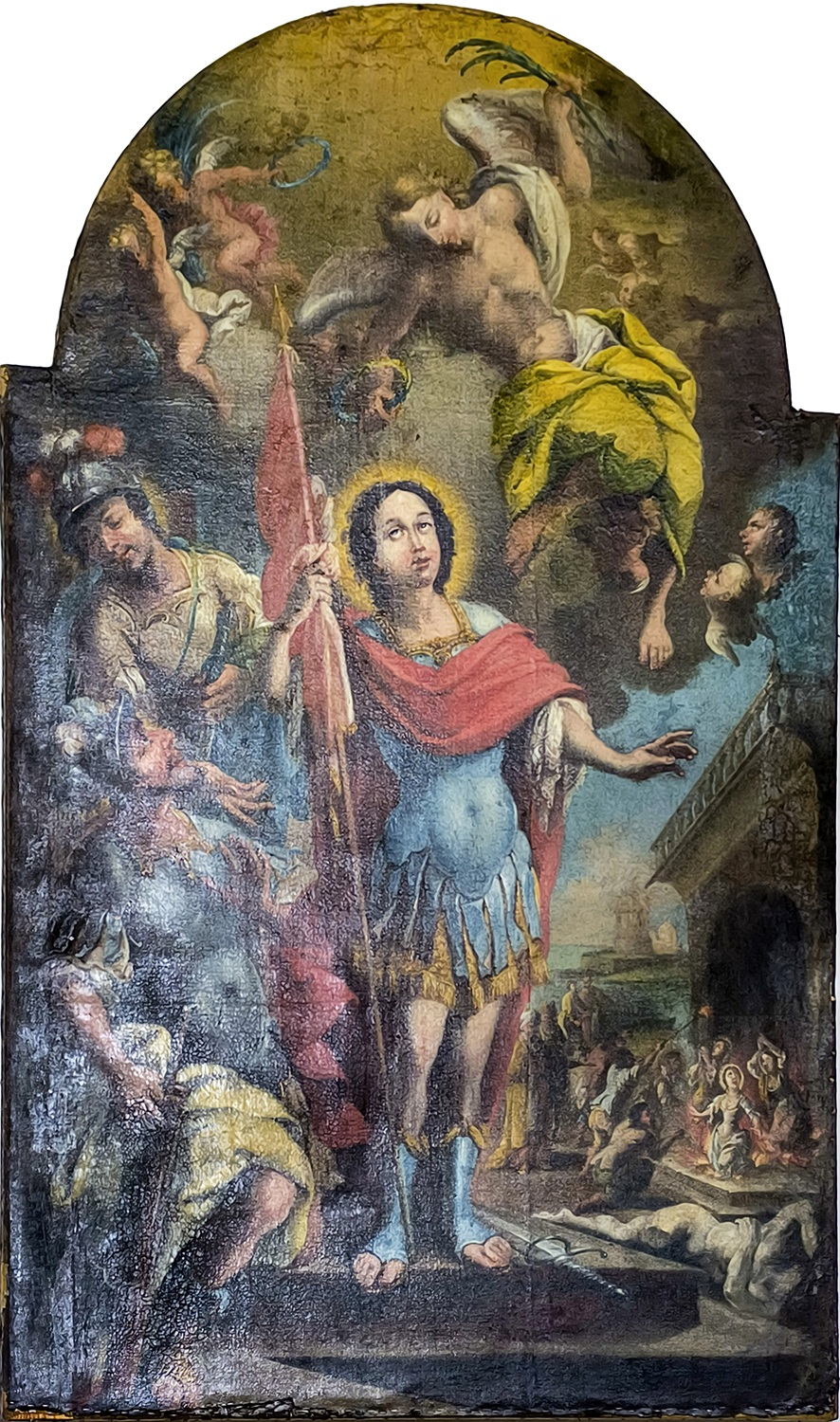
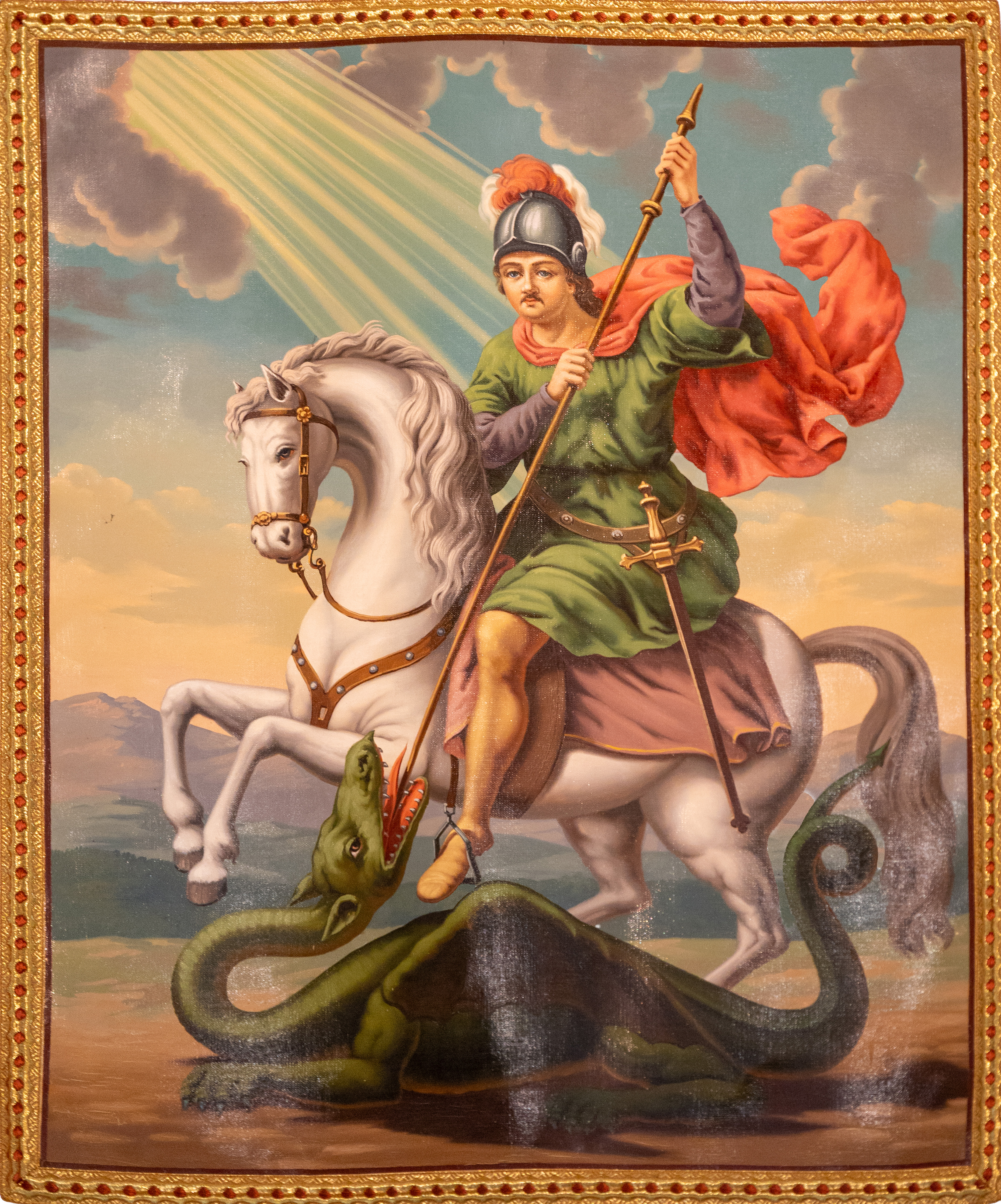
St. George slaying the dragon
Slavic mythology is understood as a system of belief of all Slavs, for which polytheism is characteristic. Considering its origin, the Slavic religious system is connected to the Vedic and other European mythologies. The Slavic pagan sacred space is defined by stories connected to specific significant places in the landscape. In the example of the Mislinja Valley, we recognize the timeless love story of Jurij and Mara, reconstructed within the framework of comparative mythology.
At selected sacred space, Christianity replaced the names of Slavic gods with saints: Perun became St. Pancras, Veles/Jurij became St. George, and Mokoš/Mara/Marija became St. Mary.
Our mythical landscape is still framed by walking paths preserved to this day, which we continue to revive.
St. Mary of Homec
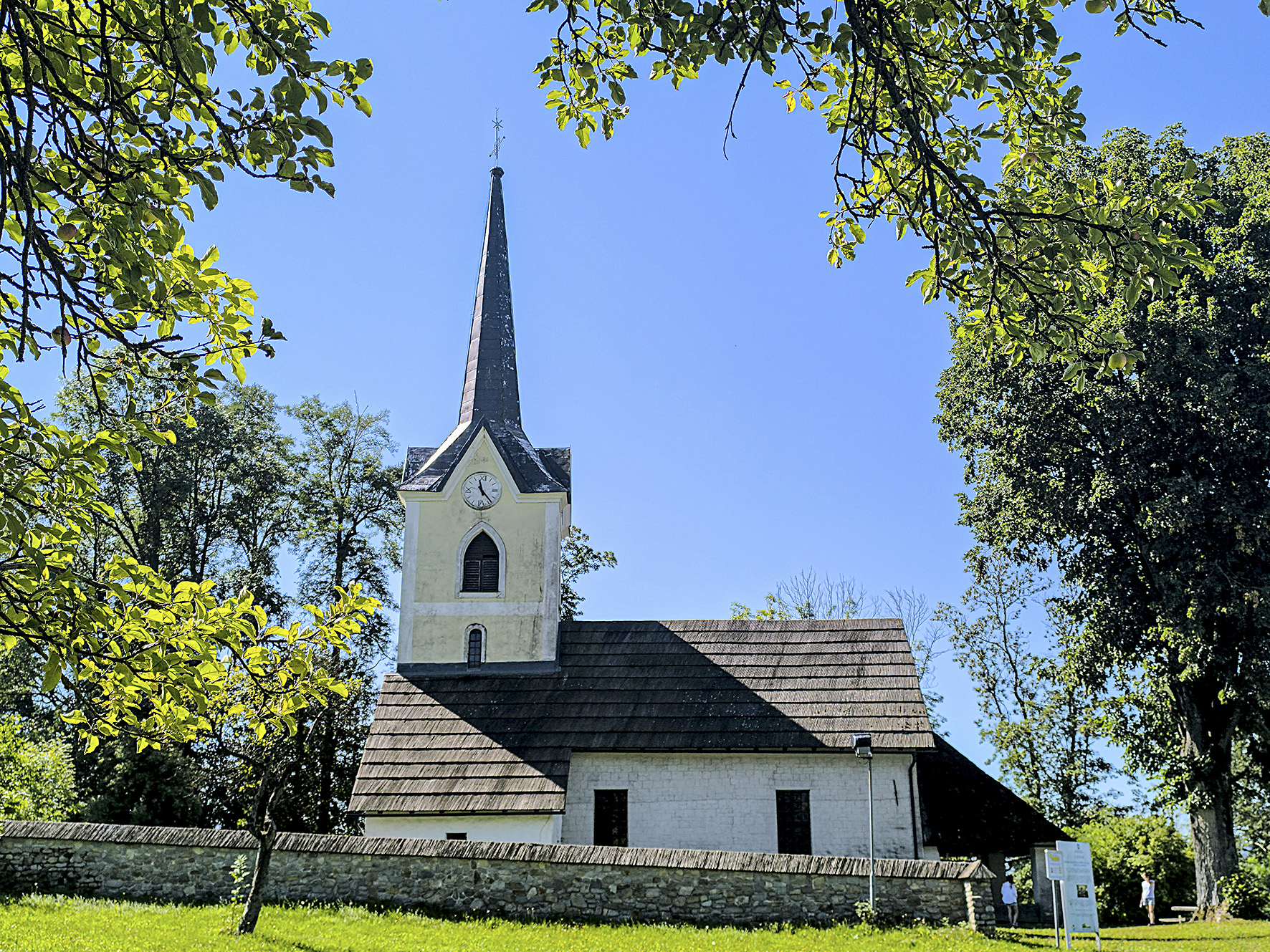
By carefully selecting sacred places in the landscape, our ancestors inscribed a mythical narrative that reflected their understanding of the cosmos, the cyclical nature of time, and alignment with the annual calendar—concepts that still resonate on a personal, unconscious level today. In the case of the Mislinja Valley, this is confirmed by archaeological remains. The renowned Church of St. George, together with the Church of St. Mary at Homec and the Church of St. Pancras above Stari trg, form a ritual triangle.
The Mislinja Valley is more broadly defined by four sacred points: Uršlja Gora (or Plešivec) on the west, Turjak Hill above Mislinja in the south, Selovec, the highest point, in the north, and the Lovrenška jezera, the area of the high-altitude marsh in the east.
Colophon:
Text: Saša Djura Jelenko and Brigita Rajšter, Carinthian Regional Museum
Proofreading: Urška Novak Lešnik
Translation: Tanja Frece
Photographs: Marica Rošker, Klemen Uršnik
Digital route map: Jaka Grabec
The trail signage was created as part of the study circle FOLLOWING THE TRAILS OF MYTHS AND LEGENDS, organised by MOCIS, Adult Education Centre Slovenj Gradec, under the mentorship of Kristina Navotnik.
Co-financed by: Ministry of Education, Municipality of Slovenj Gradec
June, 2026